
Found myself pondering the concepts of intelligence, artificial intelligence, creativity and inspiration lately. Heart versus head, mind over muse, and the places where those polarities inevitably intersect.
As a teen, with an evolving but deep appreciation for music holding a formidable presence in my life, I remember wrestling with the dilemma of how to render what I felt - with what I might be able to create. I knew just enough piano to recognize the what happens when too many discordant sounds are strung together, but I was a long way from expressing the depth of what properly arranged notes can have on the human soul.
Decades later, that question has never been resolved.
At 17, I pursued a few lessons, and early on it became clear that I was a student who would need to limit any grand aspirations. My patient instructor (please have a look at my tribute to the incomparable Betty Hansen here) seemed to realize in short order that the circle of fifths might as well be the circle of fiftieths and that a heavy emphasis on music theory would likely have a ‘diminuendo’ effect an already flickering flame.
Less inclined at that age to embrace the work - the mind work - that growing as a musician would have involved, I would inevitably migrate toward the unexpected delights I’d find following my hands across the keys, expressing, even in a minor and imperfect way, an inner voice.
I rarely practiced during the weeks between my 30 minute lessons. The hieroglyphics of the musical score never became second nature, and even if they did, they would never be my notes - my language - only mine to interpret.
Until one day.
At Mrs. Hansen’s urging, a small composition that I had been working was played on her Steinway grand for her - tentatively - and met with an unwarranted standing ovation from the ever-encouraging instructor. Our lesson that day quickly segued from me attempting to play what I had not practiced, to a seasoned musician transcribing this hidden solitary piece, note by note, into a printed score - “Genesis” by John Hart.
I guess I always knew my calling - or at least my talents - resided elsewhere. Still the flame still burns on occasion, and wherever that internal voice resides, part of it is quietly reminding me: “You really should have paid attention to your lessons more.”
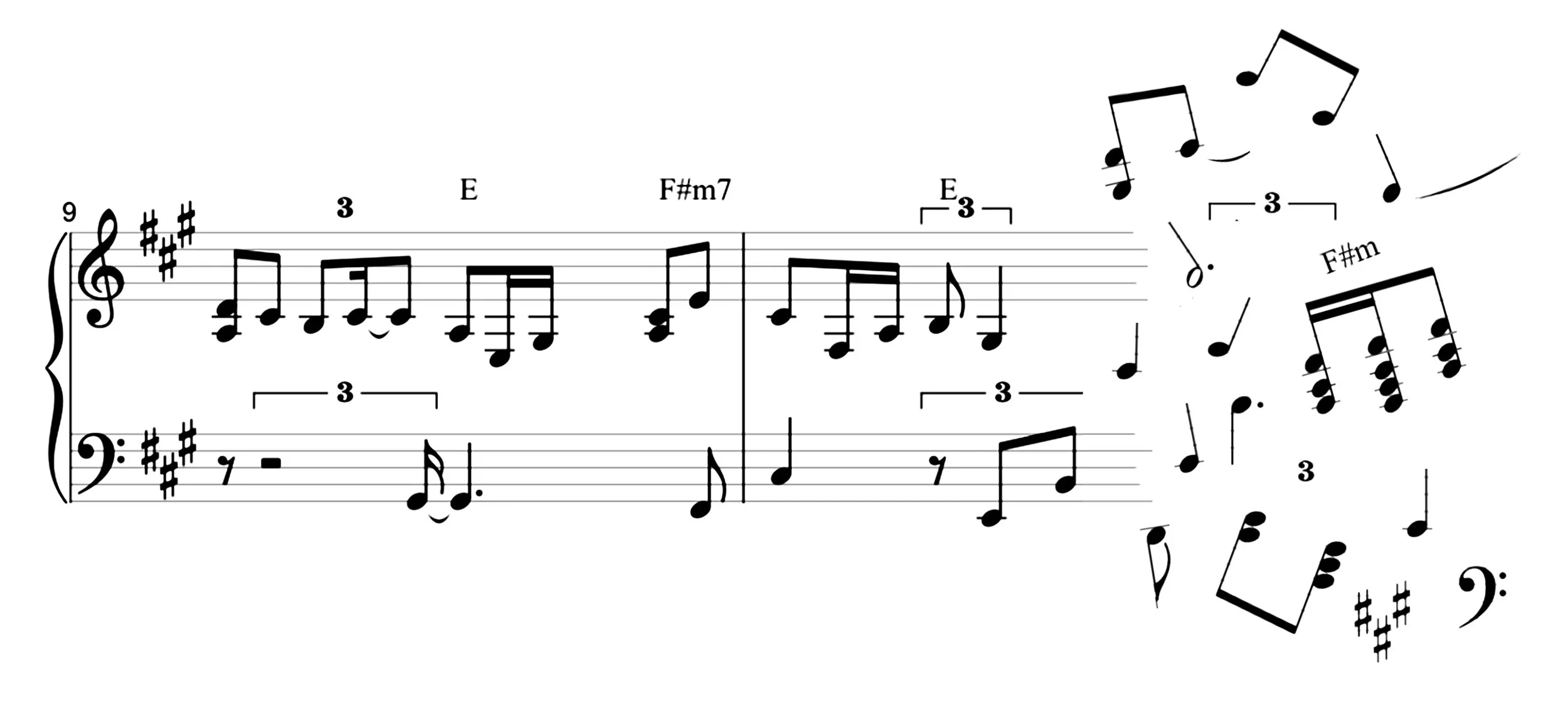
Anyways, this all came to mind recently while coming across a pretty novel and surprisingly effective use of artificial intelligence. Sadly, for the world, Betty Hansen is no longer with us, but I began to wonder if it’s possible to have a musical score generated from an audio file. So, for the price of a cup of coffee, I uploaded to a website a two minute piece of music of mine that happened to reside on my phone. Then, seconds later, there it was in all its black and white hieroglyphic grandeur: “Something More” by John Hart.
The melody was nothing more than a fleeting moment of improvisation at the time, an impromptu combination sounds generated by fingers on ivories. Had they had not been recorded, they would never have been heard again. To me, though, the printed representation left me curious, amused. There seemed to be an added value to the audio piece as a result of this new visual confirmation. More accomplished musicians might be able to discern how accurate the transcription is (as I’d still be challenged to read it!), but for now, I’m content to ponder just what resides in that space between the head and the heart, emotion and reason, inspiration and artificial intelligence.